Overview – Intellectual Property
Signal Advance, Inc. ("SAI") believes its Signal Advance ("SA") patent represents a new and unique application of the concept of ‘signal advance’ to medical and other applications, and is therefore seminal in concept. To date, SAI has not found any patents related to temporally advanced signal detection for improving the performance of control or responsive systems, nor any patents that would prevent Signal Advance from practicing its technology or that offer a superior solution to the problems SA addresses.
Summary and Status:
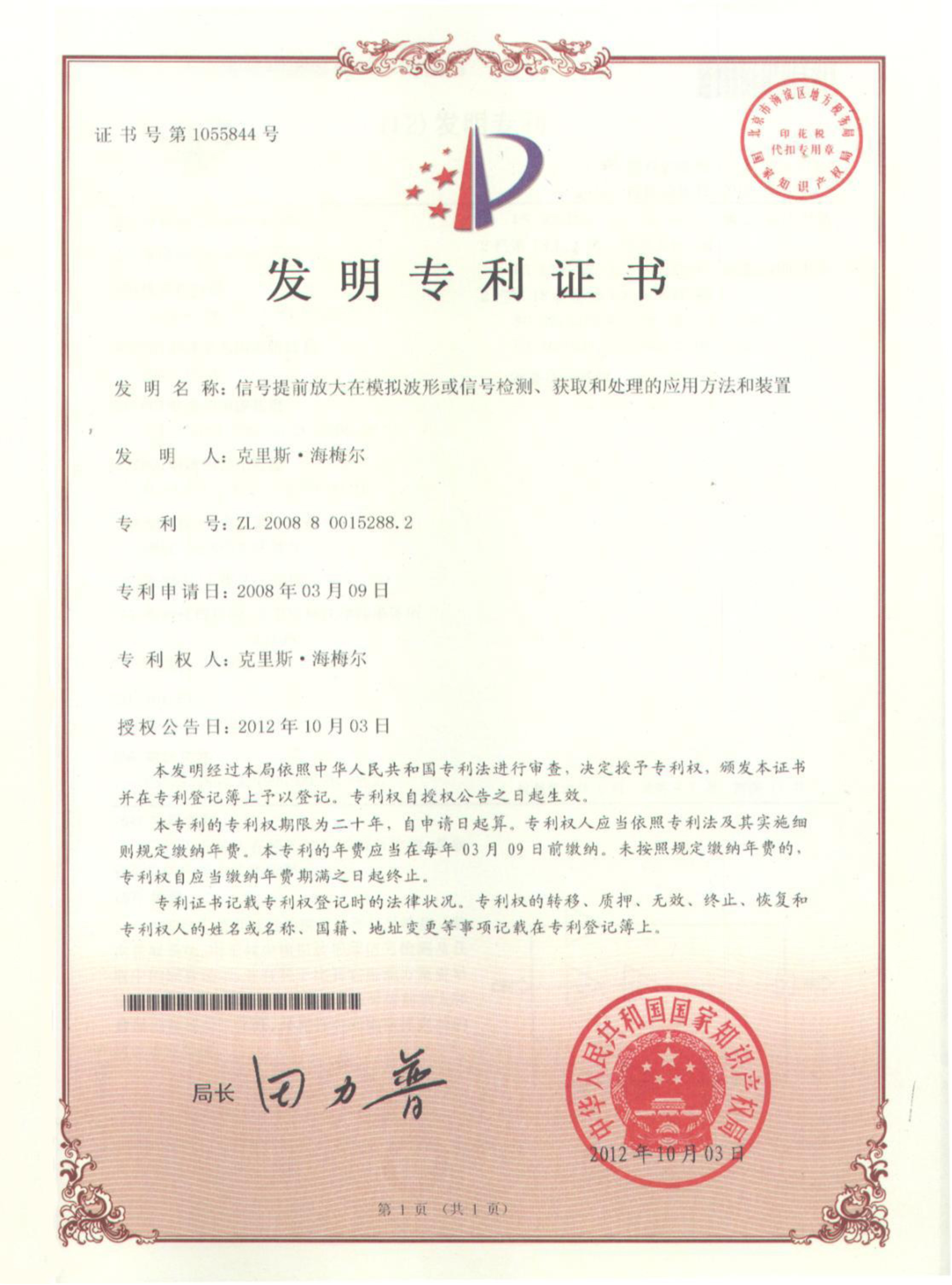
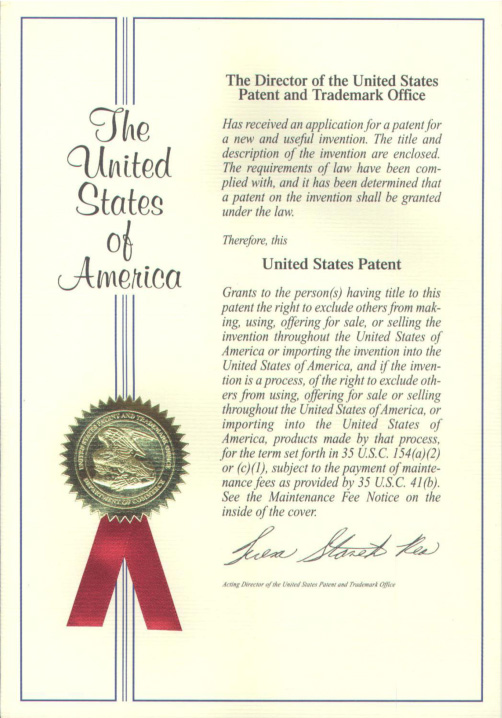
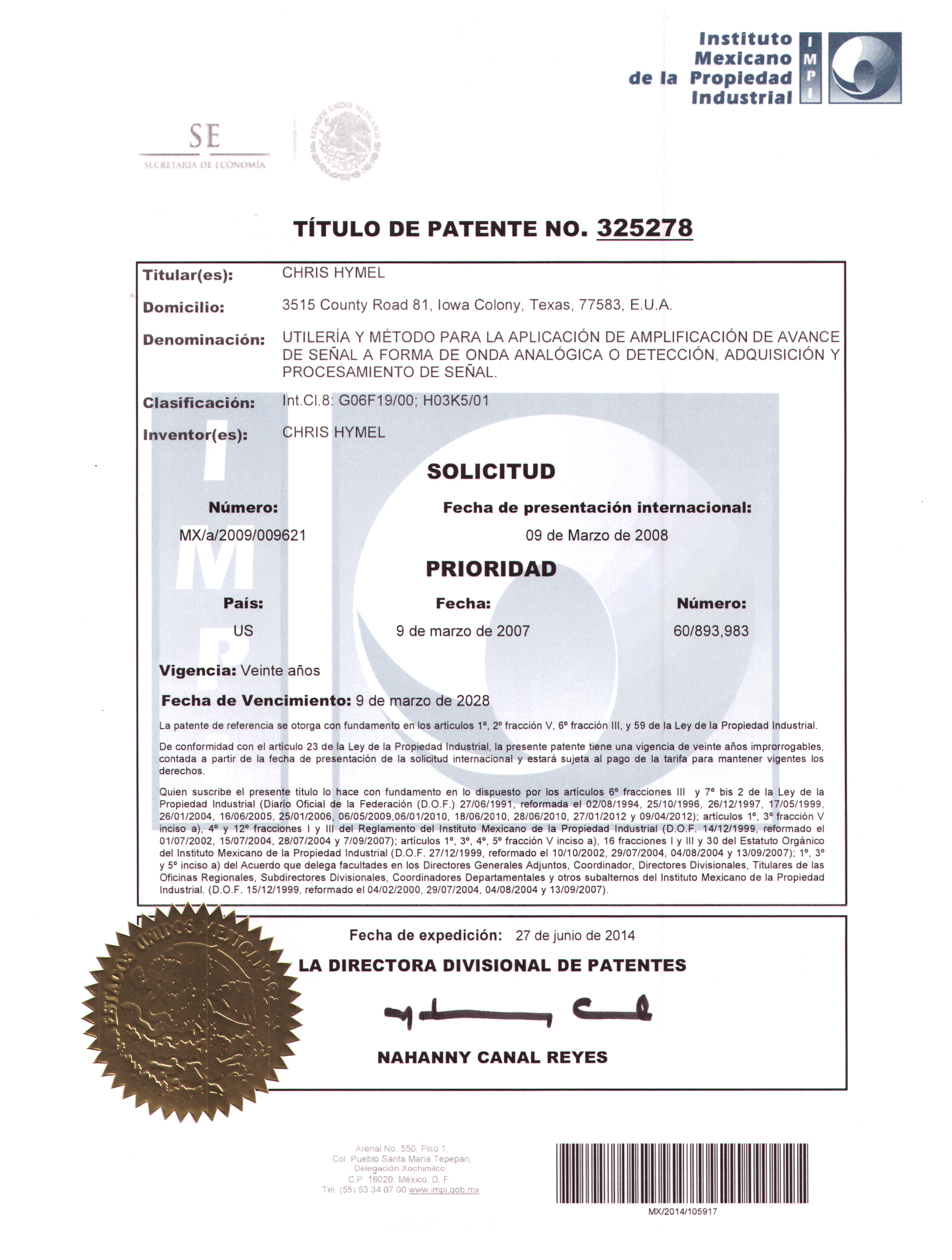
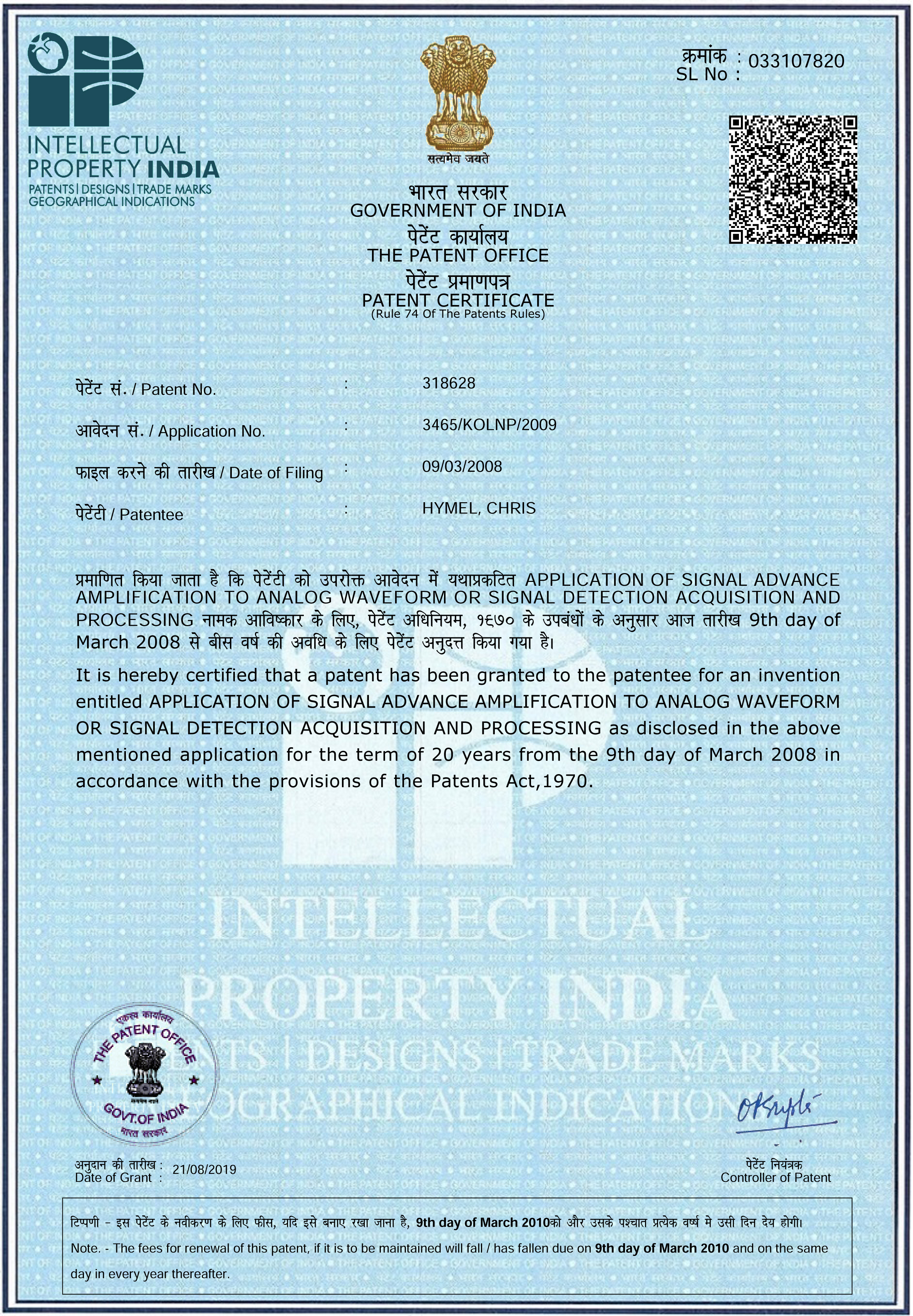
Patent applications entitled ‘Utility and Method for the Application of Signal Advance Amplification to Analog Waveform or Signal Detection’ describing the broad basis of the proprietary process and technology were filed in the U.S. Patent and Trademark Office (USPTO) as well as foreign counterparts. Patents have been granted in China (Nov. 2012), the United States (May 2013), Mexico (Jun. 2014), Europe (Jan. 2017), and India (Aug. 2019). In Europe, the countries selected for patent validation include France, Germany, Italy, Ireland, Spain, Switzerland, and the United Kingdom. Additional patent submissions covering specific applications, circuit configurations, and signal processing techniques to improve signal fidelity remain under consideration. The Company has also registered the trademark ‘Signal Advance’.
SAI's overall patent strategy reflects the fact that SA circuitry must be designed to accommodate the particular signal characteristics and requirements of each application, requiring its own circuit design and signal conditioning. The uniqueness of both the circuit design and the analysis of circuit parameters supports novelty and non-obviousness in patent claim construction, and the way SA manipulates negative group delay further supports non-obvious claims.
SAI expects each application of Signal Advance technology ("SAT") to have its own patent filing. Additional intellectual property covering various SA circuit configurations and signal conditioning techniques to improve temporally advanced signal fidelity is also being pursued. The methods used to analyze the idiosyncrasies of individual applications will be maintained as trade secrets rather than patented, so they need not be licensed and can be protected separately.
SAI has conducted extensive searches of the patent and scientific literature periodically since the first patent filings in 2008, along with detailed analyses distinguishing SAT from the prior art it has identified. Based on this analysis, SAI believes the prior art does not negate the utility and novelty of SAT, and that no combination of these references would render the technology obvious to a person skilled in the art.
SAI's intellectual property strategy is to add multiple application-specific patents to its portfolio, each standing independently so that a challenge to one will not affect the others. SAI will work with licensees to analyze market size and penetration in order to determine which international applications to file and pursue.
How is Signal Advance, Inc. innovative?
Uniqueness
“The patent is seminal in concept.” “…represents a unique application of the concept of “signal advance…” Steve Weeks, Ph.D. (Solid-State Physics), First Principals, Inc.
“…truly ‘pioneering’ or ‘landmark’…”, David Henry, Patent Attorney.
The competition
Indirect completion includes faster electronics, feed-forward and hybrid predictive control methods. Signal Advance technology, applied in conjunction with these methods, may further reduce control response time and improve performance.